Wrong access equipment
A ladder was selected for work that required both hands and awkward body positioning at height.
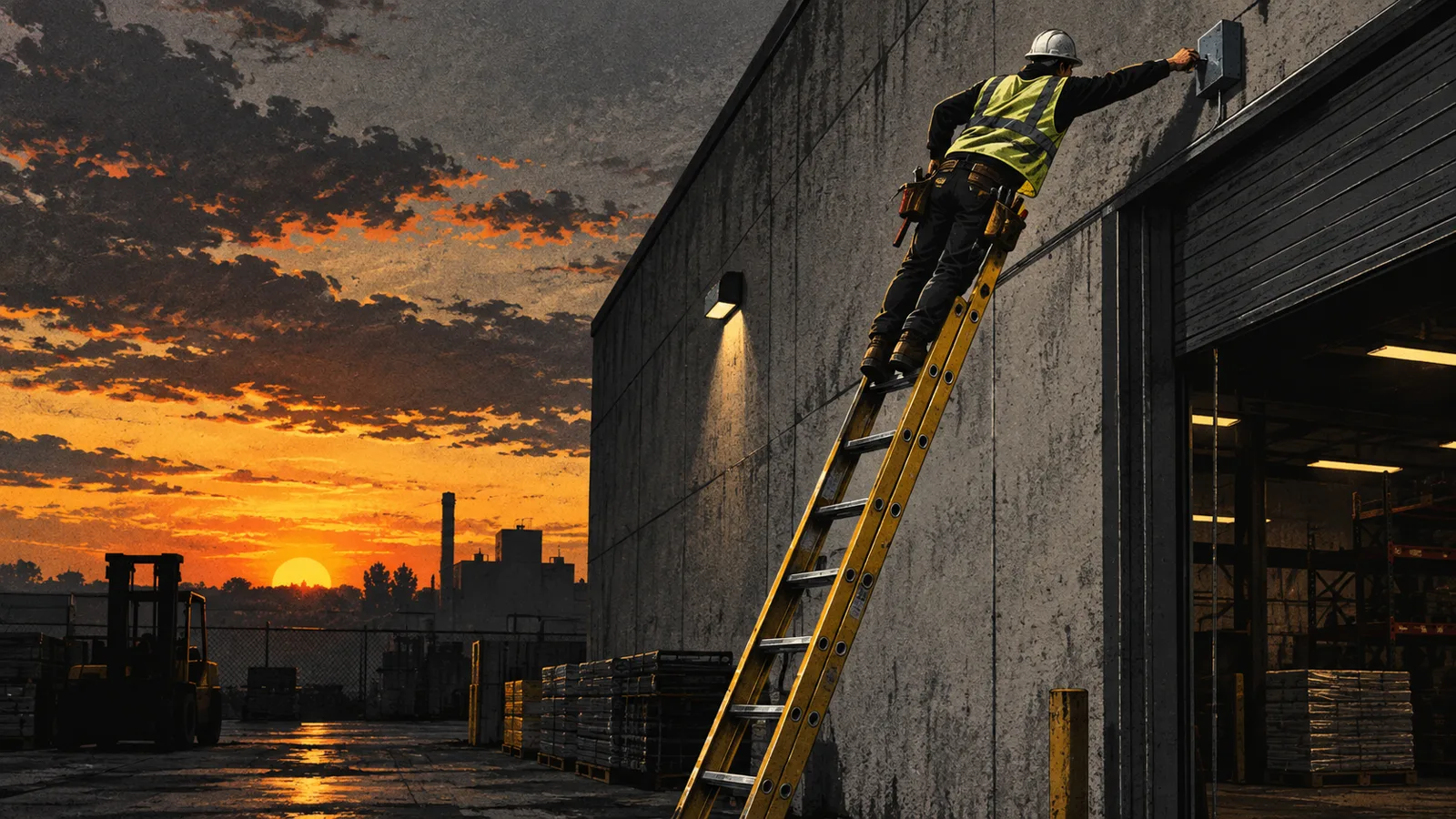
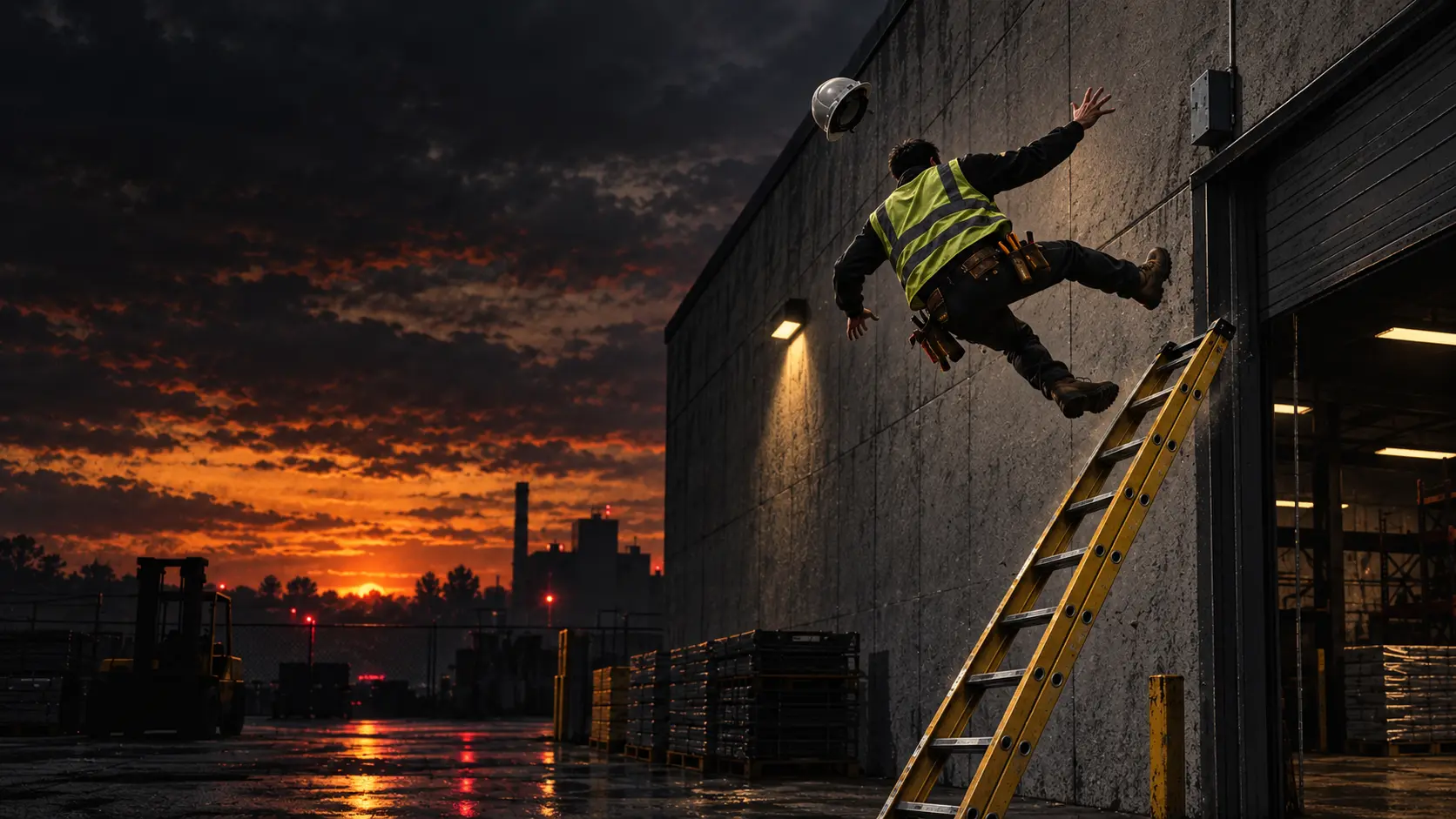
An electrician apprentice was sent up an extension ladder to work with both hands on a junction box positioned behind the ladder’s angle. The investigation’s central lesson was not how to improve the ladder. It was why a ladder should not have been the work platform.
Control first
The report concluded that an aerial lifting device was the more appropriate access method because the task required both hands, tools, and changes in body position. A platform and guardrail would provide footing and fall protection that the ladder could not.
If the task geometry forces a worker to reach behind the ladder, turn away from it, or give up a secure hold to use tools, reassess the method. In this case, the investigation pointed to an aerial lift—not a ladder accessory—as the control.
Case File 001 · Film
About this film: This is a reenactment based on the public report—not footage of the real worker or workplace. Because no one saw the fall begin, the film does not claim that any possible cause is certain.
The documented record
Morbid Safety removes identifying details and keeps the sequence concise. The facts below come from the official CA/FACE report.
Finish electrical work was underway inside a commercial storeroom. The task involved relocating an exit sign, changing conduit, and working on a ceiling-truss junction box.
A 35-foot extension ladder was used. Its top rested on a four-inch sprinkler feed pipe, with shelving crowding the work area.
The junction box sat about four feet behind the pipe. Reaching it from the ladder required working overhead and behind the body, or turning to face away from the ladder. The circuit was energized at 277 volts AC.
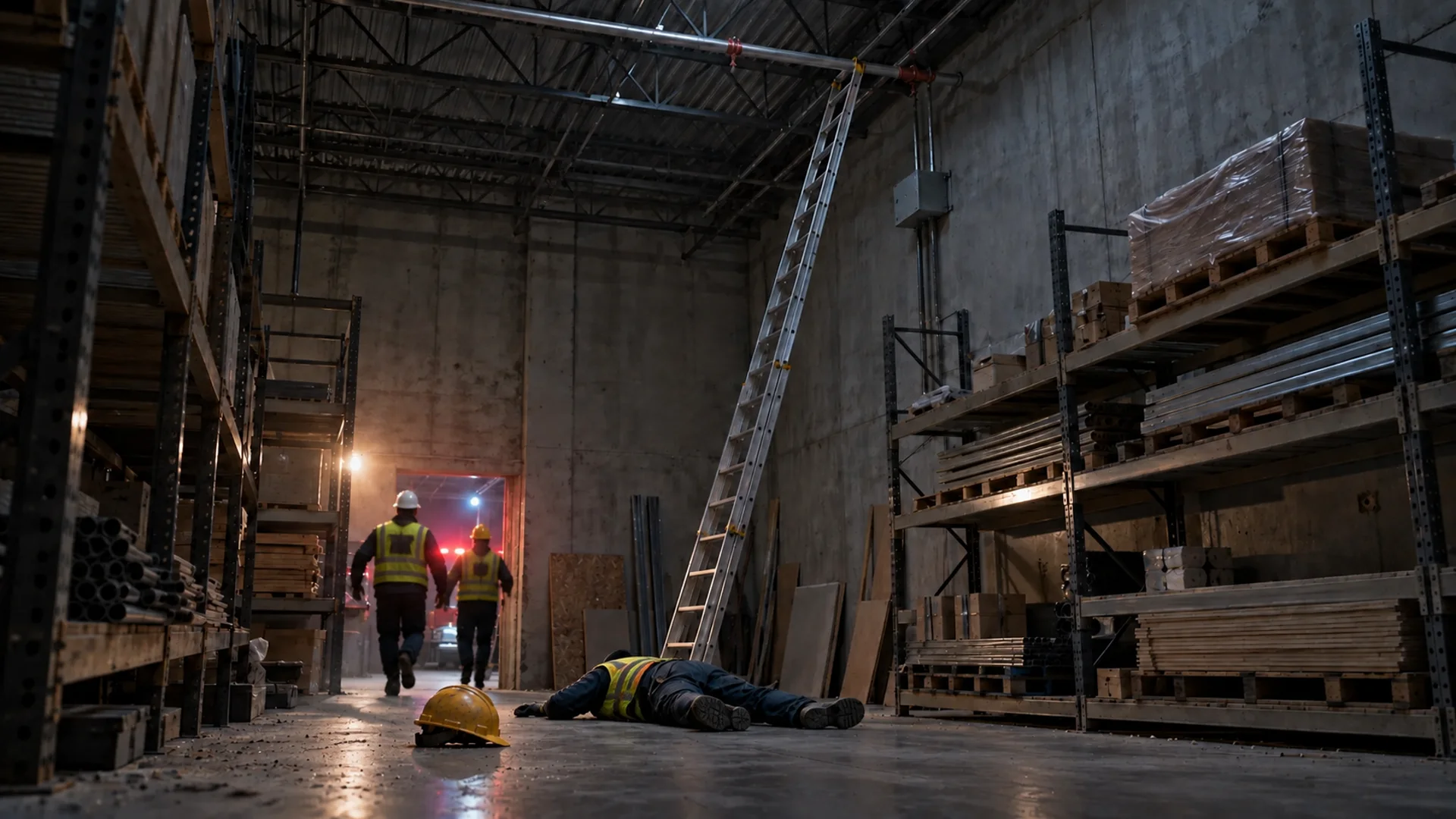
Coworkers heard a noise and found the worker on the concrete floor. The worker suffered fatal head injuries and died five days later.
The ladder was found in good condition and appeared stable after the incident. Equipment condition alone did not make the work method safe.
My safety take: No one saw exactly how the fall started, but the prevention answer is clear. This job required both hands and body movement at height, and the work could not be reached safely from that ladder. A properly selected aerial lift or work platform should have been used instead.
The failure chain
The report’s recommendations point to three preventable system decisions—not one careless moment.
A ladder was selected for work that required both hands and awkward body positioning at height.
A close look at the crowded setup and location of the box would have shown that the ladder could not provide safe access.
The acting supervisor told investigators he was unsure of his safety responsibilities. The report called for trained supervisors with authority to intervene.
The prevention plan
These are paraphrased from the CA/FACE recommendations. They address the work system before they address products.
Use an aerial lifting device where workers must use both hands, handle tools, or shift body position at height.
Review the work location, reach, obstructions, electrical condition, and safest method before work begins.
Train supervisors on their safety duties and empower them to reject an unsafe method before exposure begins.
What the rules point to
The investigation recommendation and the regulatory framework point in the same direction: when the task cannot be performed safely from a ladder, change the access method.
29 CFR 1926.1053 addresses ladder use, while 29 CFR 1926.453 addresses aerial lifts. The exact provisions depend on the work and equipment selected.
Title 8 §3276 requires scaffolds or other worker-positioning equipment when work cannot be safely done from ladders. §3648 covers operation of aerial devices, including authorized operators, pre-use control checks, capacity, setup, and fall protection.
This incident occurred in California. The cited Cal/OSHA provisions are provided as current context; determining every applicable requirement still depends on the employer, task, equipment, and work classification.
Episode 001 transcript
The visual treatment remains anonymous and non-gory. The narration distinguishes established facts from unresolved possibilities.
“The ladder was sound. That wasn’t enough.”
“An electrician apprentice was assigned to rewire a junction box high inside a commercial storeroom.”
“A 35-foot extension ladder rested against a sprinkler pipe. Shelving crowded the setup. The box sat behind the ladder’s angle.”
“Reaching the work required both hands overhead, an awkward reach behind the ladder, or turning away from it.”
“Coworkers heard the fall. He suffered fatal head injuries and died five days later. The investigation could not determine whether the fall began with lost balance, lost footing, or electrical contact.”
“The lesson here was not to buy a better ladder. Assess the task. Use a guarded lifting platform. Put safety decisions in trained hands.”
Source ledger
Primary government sources are linked directly. FACE investigations identify hazards and prevention measures; they do not enforce standards or determine fault.
Incident facts, uncertainty, contributing conditions, and the three prevention recommendations used in this case file.
Explains the program’s prevention mission and its non-enforcement, non-fault role.
Current general guidance for ladder selection, inspection, setup, climbing, and use. It does not override the report’s conclusion that a ladder was unsuitable for this task.