Unprotected work area
The collapse occurred in the open space between two shoring sections.
A construction worker was installing sewer pipe in a trench approximately ten feet deep and three feet wide. The wall collapsed in a 15-foot unprotected space between two shoring sections, burying the worker under approximately six feet of soil.
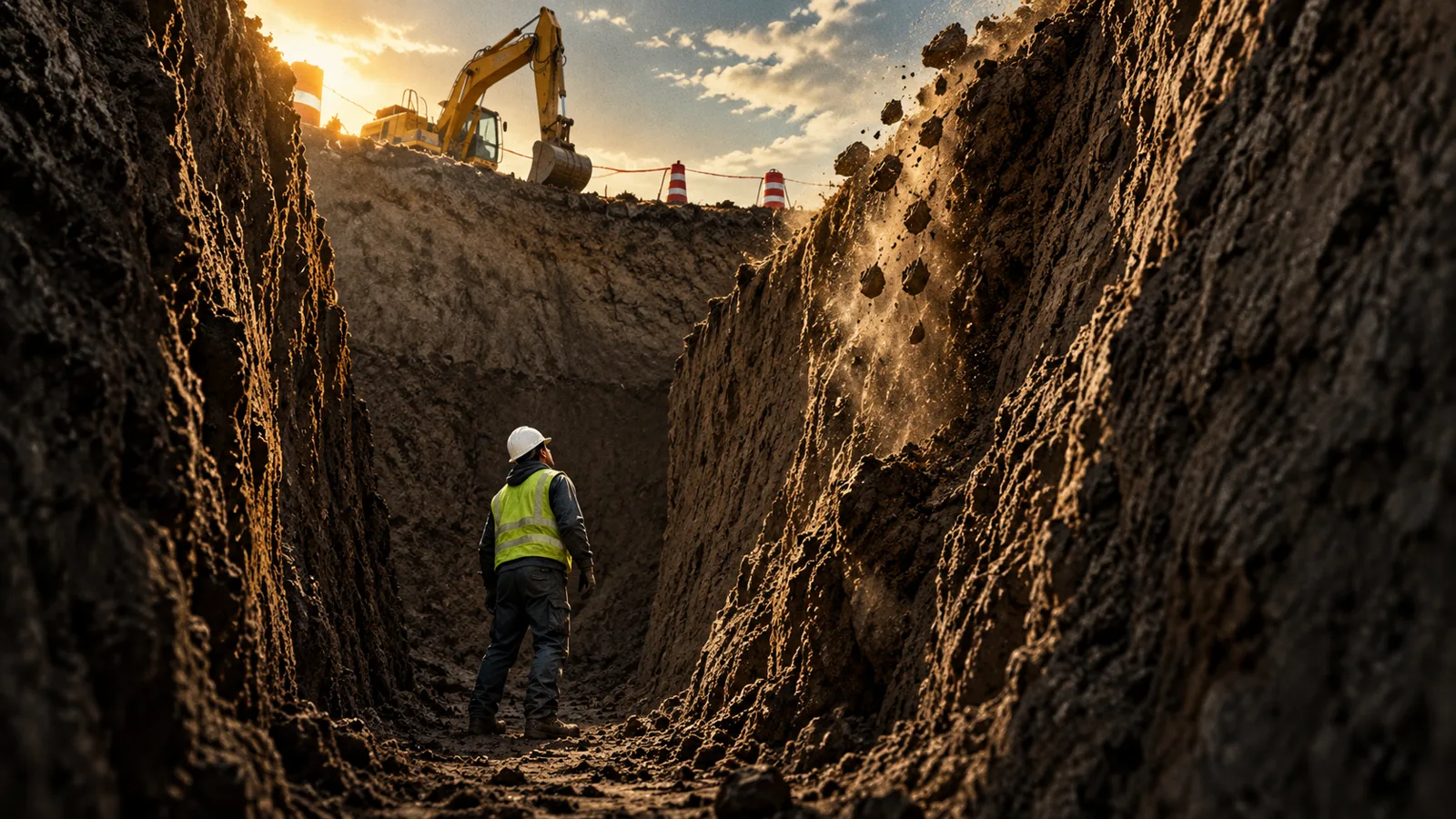
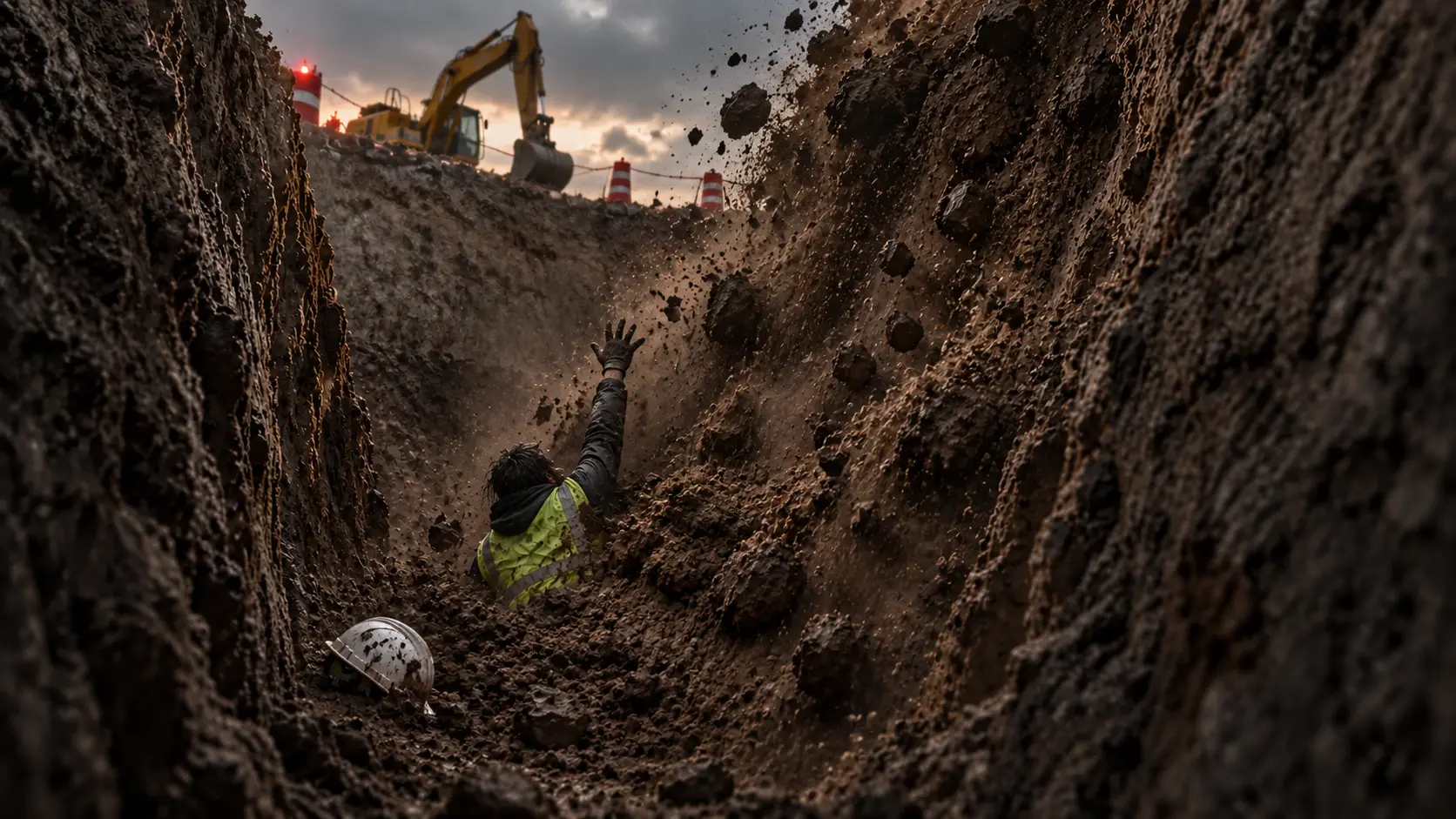
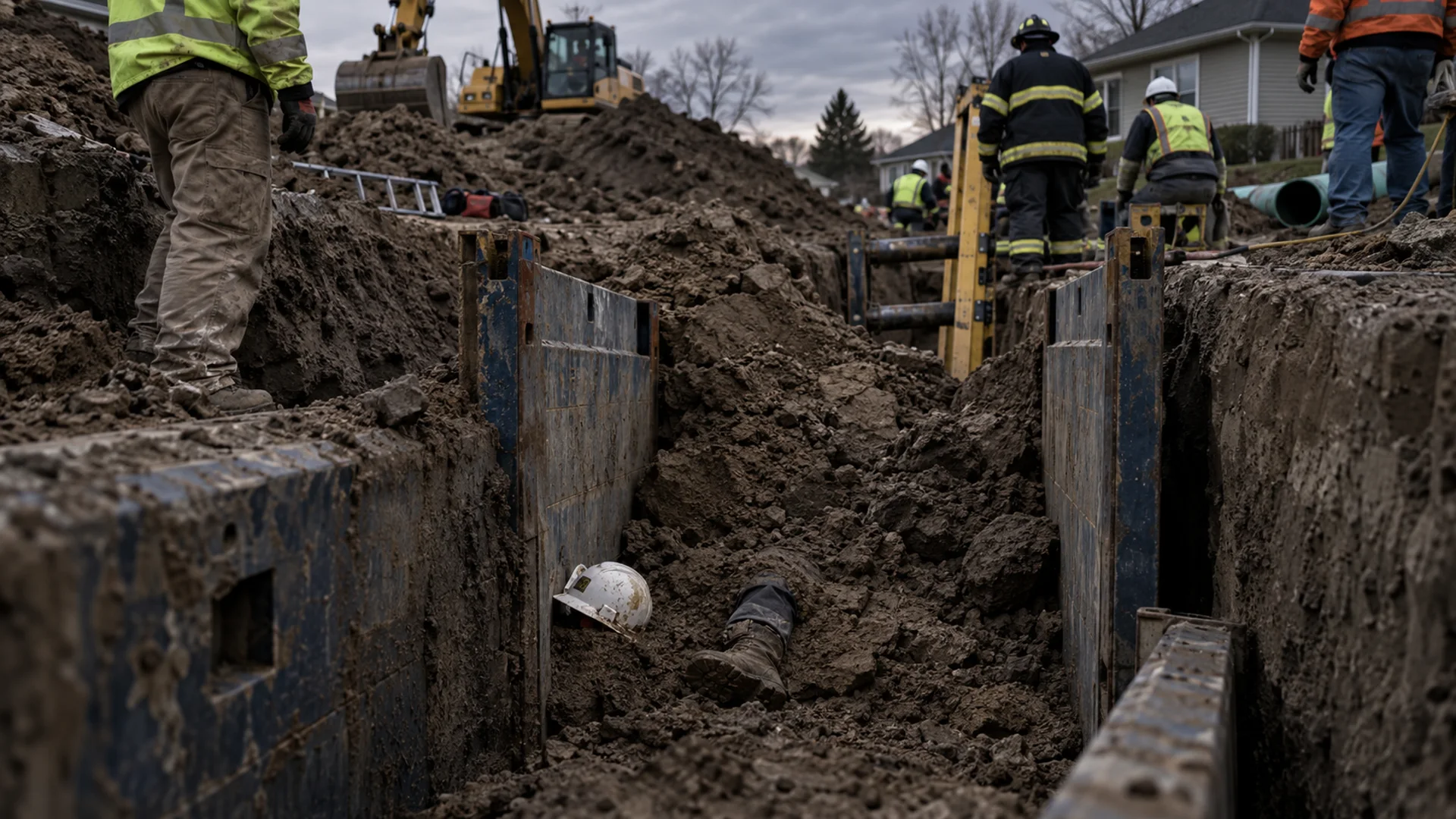
Case File 003 · Film
About this film: This is a reenactment based on the public report—not footage of the real worker or workplace.
Control first
The report identified an inadequate protective system as a key factor. Two shoring sections did not protect the worker standing in the 15-foot space between them. The system must match the soil, depth, configuration, water, surcharge loads, and work area—not merely be present somewhere in the trench.
Before anyone enters, a competent person must evaluate conditions and ensure the occupied area is properly sloped, shored, or shielded under the applicable requirements and tabulated data. Stop work whenever the system does not cover where the worker must stand.
The documented record
The facts below come from the official Oregon worker-fatality investigation. The reenactments are not evidence or a literal copy of the scene.
A small excavation contractor was installing sewer pipe at a residential property.
The trench was approximately ten feet deep and three feet wide where the collapse occurred.
Two pieces of shoring were spaced approximately 15 feet apart. The worker entered the unprotected area between them.
The trench wall failed and buried the worker beneath approximately six feet of soil.
Coworkers called 911 and tried unsuccessfully to locate and dig out the worker. Responders first had to shore the trench before recovery could proceed safely.
My safety take: Having shoring nearby did not make this trench safe. The worker was standing in an unprotected section of a ten-foot-deep trench. No one should have entered until a competent person had inspected the excavation and a properly selected protective system covered the entire occupied work area.
The failure chain
The report identified physical gaps and management gaps that existed before the wall moved.
The collapse occurred in the open space between two shoring sections.
Excavated material had been placed too near the trench edge, adding a hazard the report specifically identified.
The investigation cited inadequate oversight and insufficient training in recognizing and reporting hazards.
The prevention plan
These controls paraphrase the OR FACE recommendations and current federal excavation requirements. Conditions and jurisdiction determine the exact system.
For trenches five feet deep or deeper, provide an appropriate protective system unless the excavation is made entirely in stable rock.
Provide the knowledge and authority to inspect before work, throughout the shift as needed, after changing conditions, and to remove workers from danger.
Use visual and manual soil tests and the applicable manufacturer tabulated data or regulatory tables to select and install the system.
For trench excavations four feet deep or more, place a ladder, stairway, ramp, or other safe means of egress within the required travel distance.
Keep spoils, materials, and equipment at least two feet from the edge or use another effective retaining measure.
What the rules point to
Having shoring somewhere in the trench is not enough. The system, access, inspections, and spoil control have to protect the place where employees actually work.
29 CFR 1926.651 addresses access, inspections, spoils, and other excavation hazards. 29 CFR 1926.652 addresses protection from cave-ins and protective-system design.
Title 8 §1541 includes competent-person inspections, four-foot egress, the 25-foot travel limit, and two-foot spoil setback. §1541.1 covers sloping, shoring, shielding, soil classification, and design options.
This incident occurred in Oregon. The California material is a comparison for California work; the governing requirements depend on the project location and jurisdiction.
Episode 003 transcript
The narration follows the documented sequence and ends with complete protection of the occupied work zone.
“Ten feet down. Fifteen feet of open trench. No protection where the worker stood.”
“A small excavation contractor was installing sewer pipe at a residential property. Two shoring sections had been placed in the trench.”
“But the sections were about fifteen feet apart. The worker entered the unprotected space between them.”
“The wall collapsed. Approximately six feet of soil buried him before rescue could begin.”
“Coworkers called nine-one-one and tried to dig him out. Responders first had to shore the trench before they could safely recover him.”
“A protective system only works where the worker is protected. Shore, shield, or slope the entire occupied zone. Keep spoils back. Follow the tabulated data. Give the competent person authority to stop entry.”
Source ledger
Primary government sources are linked directly. FACE investigations identify hazards and prevention measures; they do not enforce standards or determine fault.
Incident facts, key factors, and the seven recommendations supporting this case file.
Federal construction requirements for excavation protective systems.
Federal construction requirements addressing inspections, spoil placement, access, egress, and other excavation conditions.