Cover or guard skylights
Install compliant load-bearing covers or guardrail systems around skylights before workers enter the exposed area. Secure and identify covers as required.
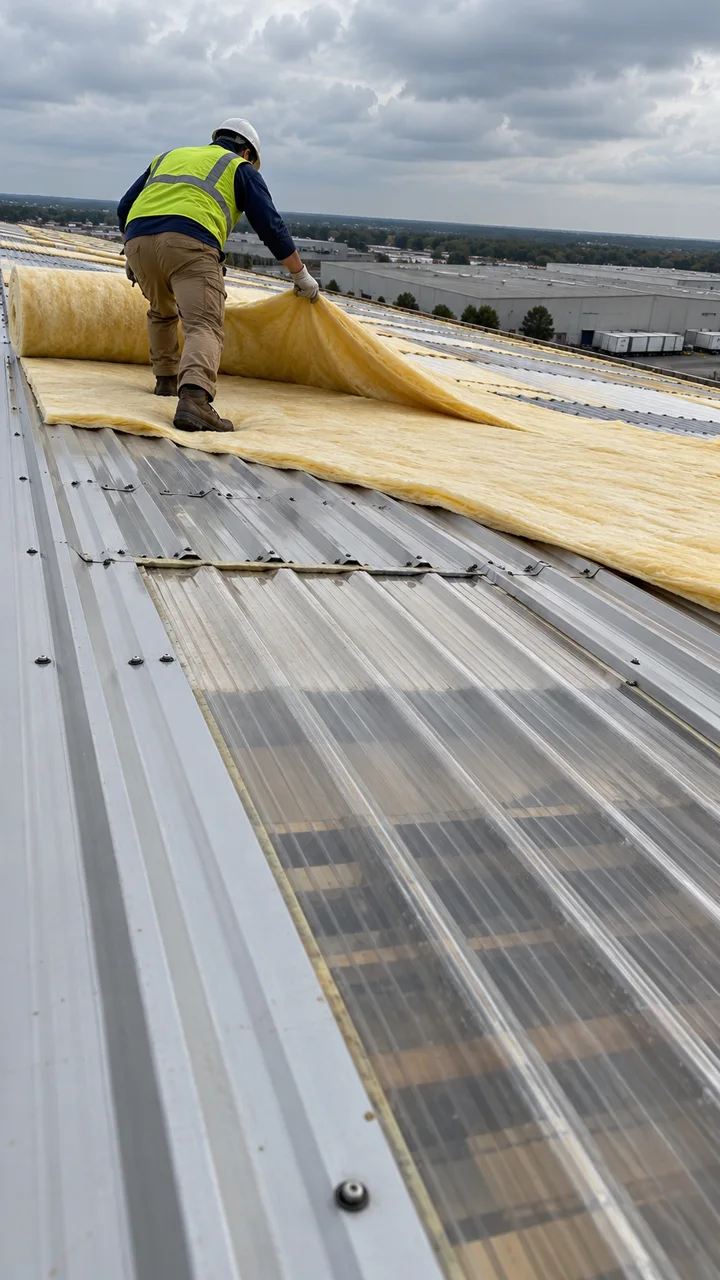
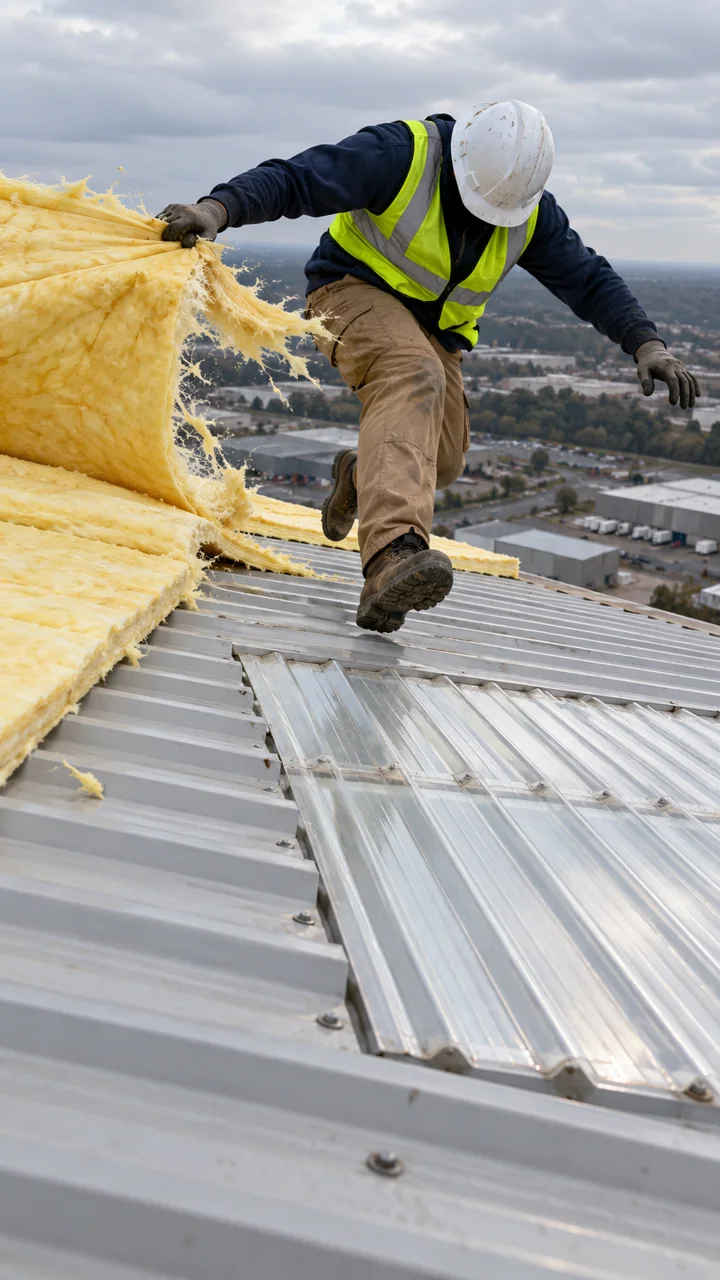
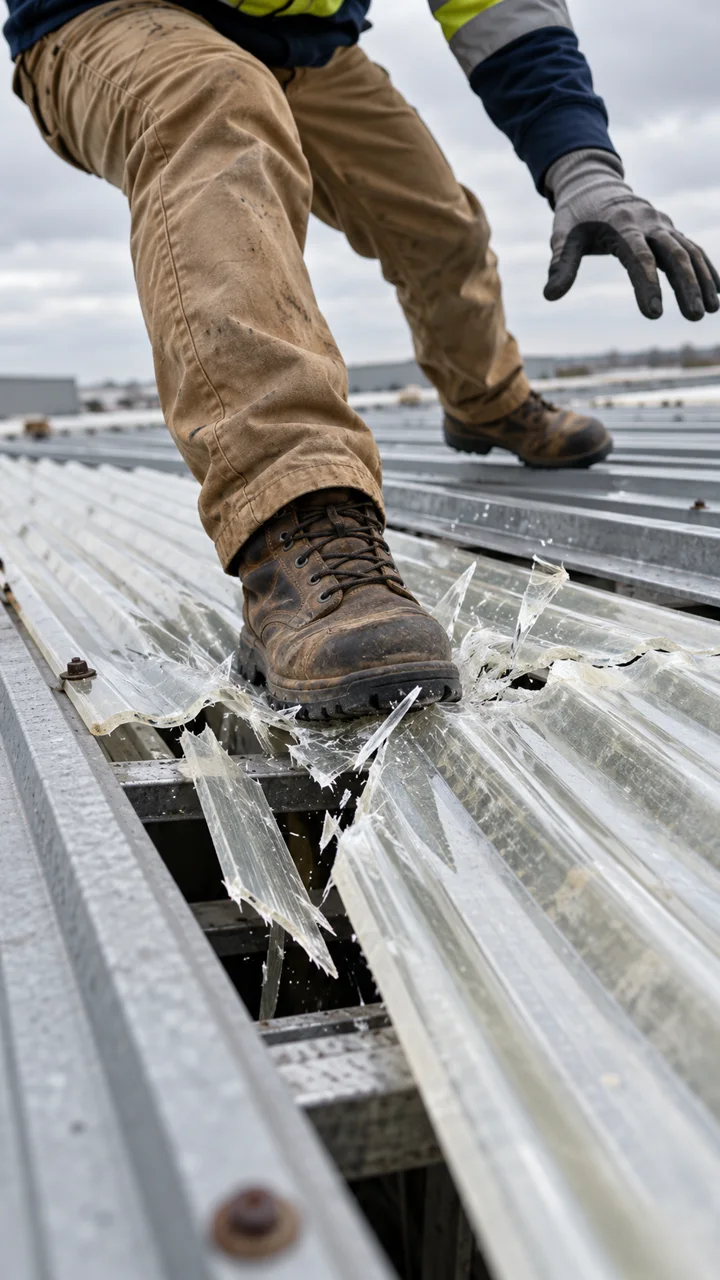
A roofer pulling fiberglass insulation lost his balance. He stepped onto a flush translucent skylight that blended into the corrugated roof. The panel broke, and he fell approximately 30 feet.
Case File 006 · Captioned visual film
About this film: Narrated, with on-screen captions and restrained sound design. AI-generated illustrative reenactment, not footage of the actual people, roof, employer, or workplace. The captions distinguish documented findings from professional safety analysis.
Control first
Use a compliant cover or guardrail system to prevent access to the skylight hazard. Where exposure remains, add a properly planned personal fall-arrest system with a suitable anchorage and enough clearance.
A translucent roof panel is not a walking surface. Treat every skylight as an open hole unless a competent person has verified that a compliant cover or guardrail protects it.
The documented record
Kentucky's Fatality Assessment and Control Evaluation program investigated the accident. FACE identifies prevention lessons; it is not an enforcement decision.
A crew was replacing insulation and corrugated roofing on a warehouse with a 1:12-pitch roof. Flush corrugated fiberglass skylights remained in the roof.
Three roofers were on the roof approximately 30 feet above a concrete floor. None wore fall protection, and the nearby skylights were not guarded.
The roofer pulled rolled fiberglass insulation tight. The material tore, causing him to lose his balance and stagger forward.
He stepped onto a corrugated fiberglass skylight panel attached to the purlins. It broke under his weight, and he fell approximately 30 feet to the concrete below.
FACE reported no job hazard analysis, no competent person onsite, no skylight guarding, no fall-protection training, and available personal fall protection that was not used.
What we do not know: The report does not establish the precise path of each foot or hand beyond the documented loss of balance and step onto the panel. The AI scenes illustrate the mechanism; they do not reconstruct the actual worker, exact roof layout, or final injuries.
The prevention plan
Passive protection comes first. Personal fall arrest, training, and enforcement support the system where exposure remains.
Install compliant load-bearing covers or guardrail systems around skylights before workers enter the exposed area. Secure and identify covers as required.
Have a competent person identify skylights, edges, material paths, anchors, and rescue needs in a task-specific hazard analysis before work begins.
Where passive protection does not eliminate the fall hazard, use a compatible personal fall-arrest system with a suitable anchorage and verified fall clearance.
Train workers to recognize roof openings and use the selected system. Supervisors must correct missing controls before allowing work to continue.
Regulatory context
This case directly supports the federal OSHA Top 10 fall-protection topic. The regulatory discussion is prevention context, not a claim about citations issued in the original case.
Duty to have fall protection requires protection from falls through holes, including skylights, more than six feet above lower levels by personal fall-arrest systems, covers, or guardrail systems.
Fall-protection systems criteria addresses requirements for guardrails, covers, personal fall-arrest systems, and related practices.
Kentucky operated an OSHA-approved State Plan at the time. Current federal rules are presented as educational context; Morbid Safety does not infer an enforcement finding beyond the source record.
Source ledger
Sources checked October 19, 2026.
Pages 1–5: work sequence, roof and skylight configuration, fall distance, training, equipment use, contributing factors, and recommendations.
Fall protection for holes, including skylights.
Criteria for covers, guardrails, personal fall-arrest systems, and related practices.