Unrecognized metal fixture
The yard check did not identify and remove or mark the low pet tie-out stake before mowing began.
Two landscaping workers checked a residential yard before beginning. Both wore safety goggles. A commercial mower then struck a low metal pet tie-out stake and sent a fragment toward a coworker working about 25 feet away.
Case File 004 · Film
About this film: This is a reenactment based on the public report—not footage of the real worker or workplace.
Control first
The investigation put the first safeguards ahead of personal protective equipment (PPE): check the work area, remove or mark hazards, aim the mower discharge away from people, and keep workers separated. The worker wore goggles, but goggles could not stop the mower from launching an object.
Control the object, the discharge direction, and the work zone first. Eye, face, and side-of-head protection are important final layers—but they do not replace clearing the area or keeping people out of the line of fire.
The documented record
The facts below come from the official federal worker-fatality investigation. The reenactments are not evidence or a literal copy of the scene.
Two workers arrived at a residential property to mow and trim the lawn after completing eight other properties that day.
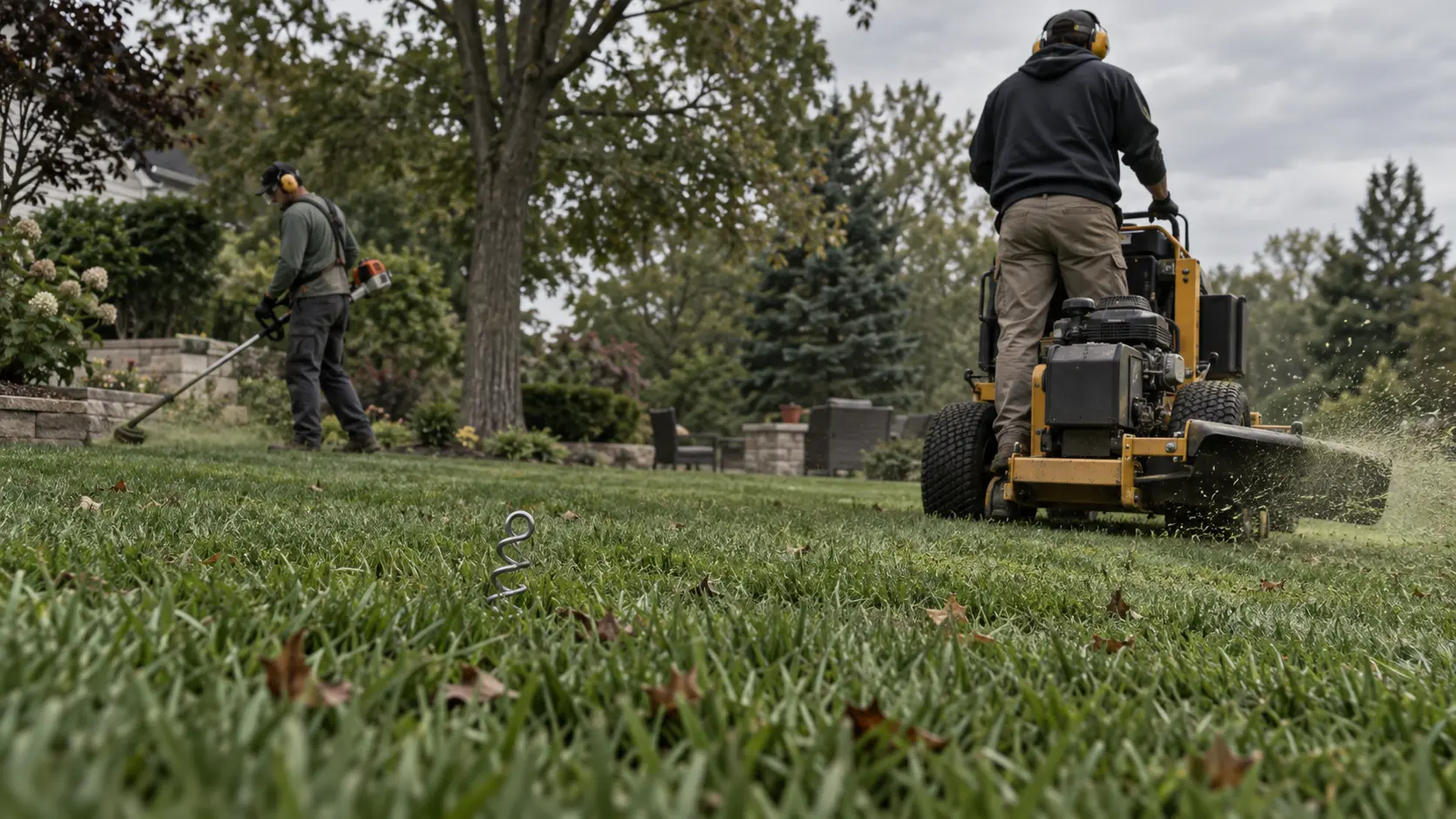
Before work began, both workers examined the yard for debris. A low spiral metal pet tie-out stake remained in the grass.
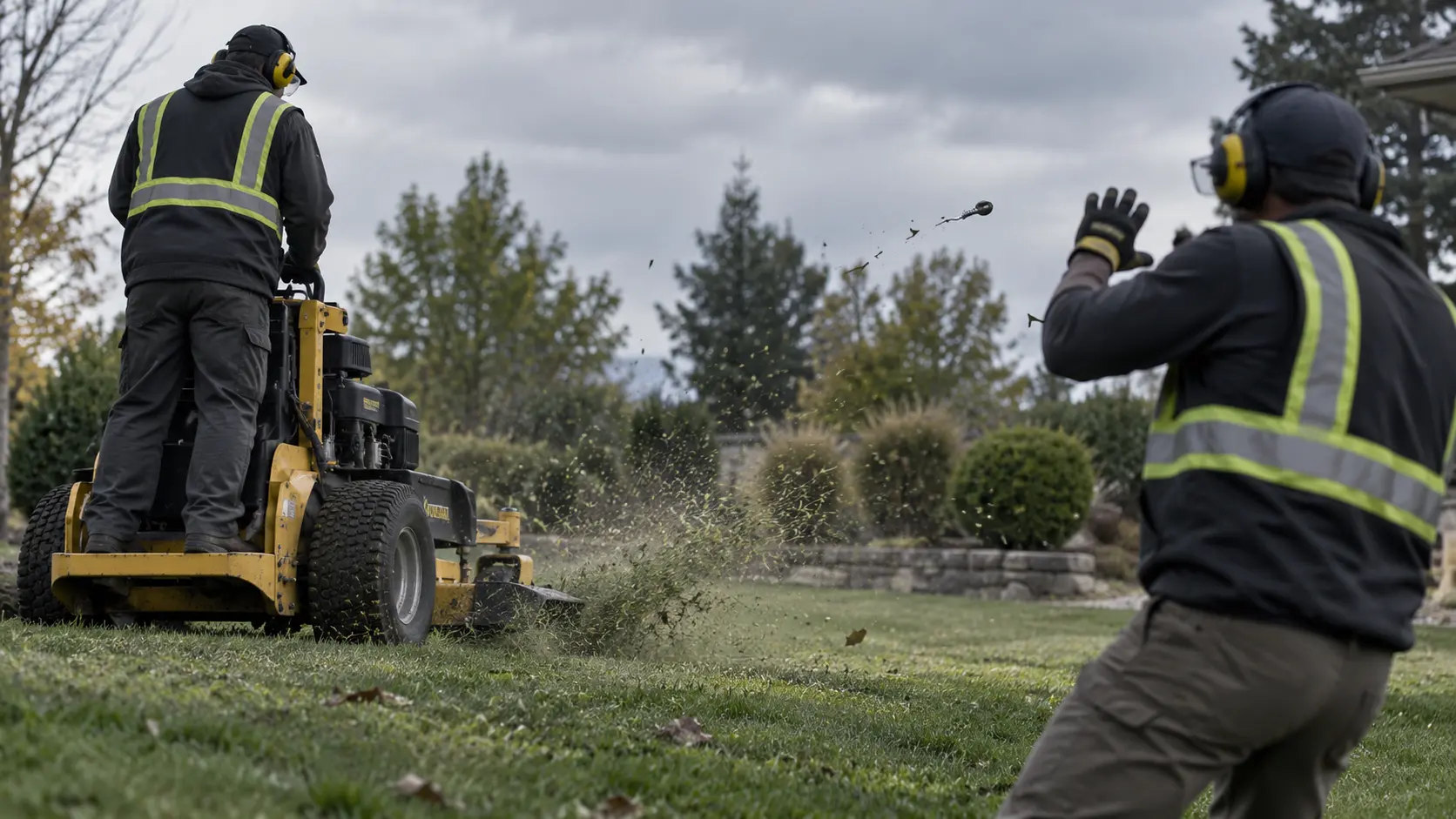
One worker operated a string trimmer approximately 25 feet from a coworker using a commercial stand-on mower. Both workers were wearing safety goggles.
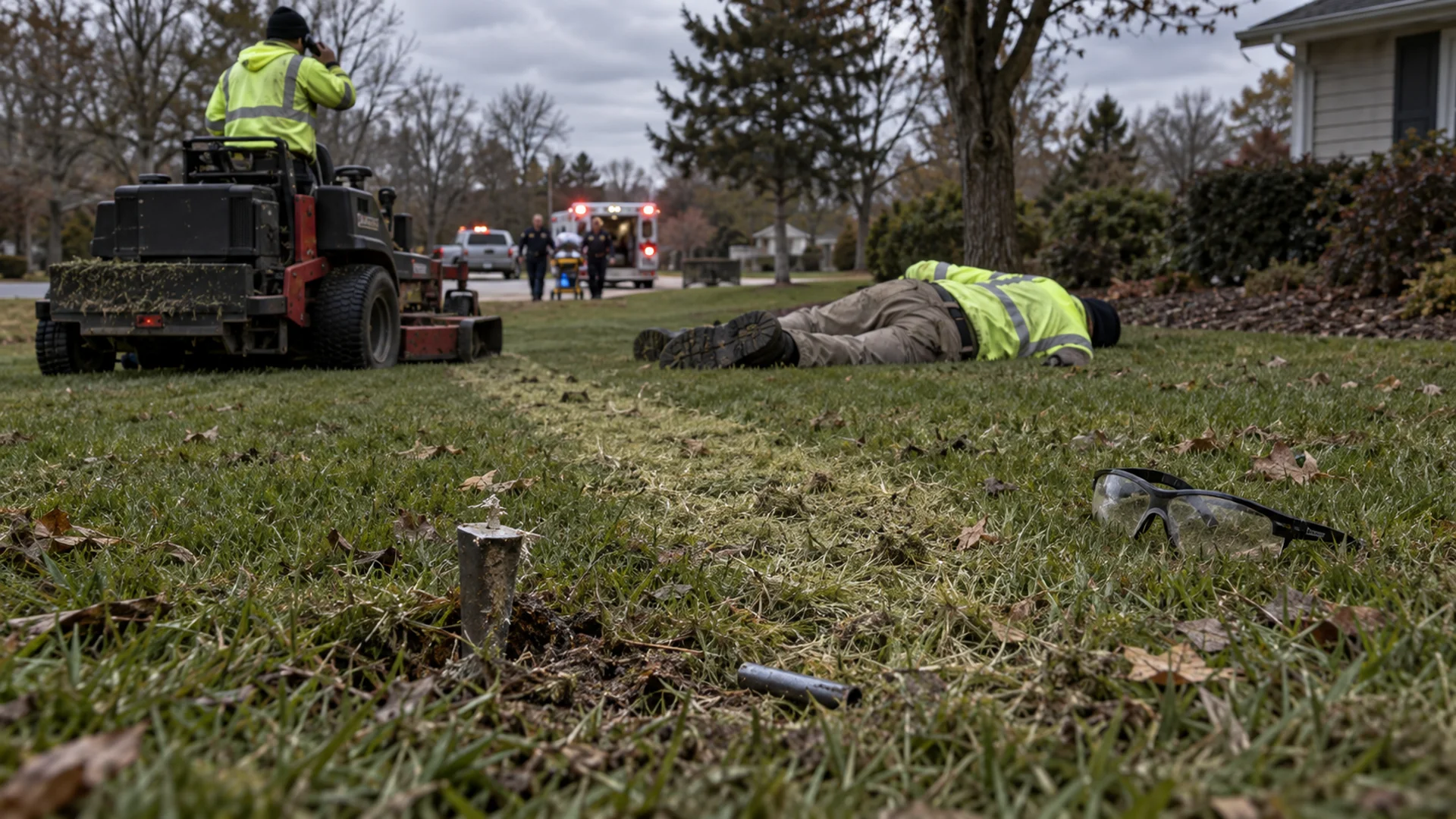
The mower struck the stake, sheared off a metal fragment, and discharged it toward the other worker. The fragment struck the worker on the side of the head.
The worker died the following day. The medical examiner identified traumatic brain injury from blunt-force trauma caused by the metal projectile.
My safety take: The exact positions at impact do not change the prevention lesson. A worker should never be in a mower’s discharge path. The yard needed to be cleared, the discharge directed away from people, and the workers kept out of each other’s line of fire. Goggles were only a final layer of protection—not the control that should have been relied on.
The failure chain
The fatal sequence began with a small object that stayed in the work area and ended with an open path between the mower and a nearby worker.
The yard check did not identify and remove or mark the low pet tie-out stake before mowing began.
The mower discharge deflector faced toward the area where the other worker was working.
The report noted that mower-thrown objects can travel unpredictable distances; no universal safe distance was established.
The prevention plan
These controls paraphrase the NIOSH recommendations and place PPE after the source, path, and work-zone controls.
Remove sticks, rocks, wire, stakes, and temporary fixtures. Clearly flag anything that cannot be removed.
Never aim a mower discharge toward people or buildings. Sequence mowing and trimming so workers do not enter each other’s line of fire.
Inspect the discharge deflector and other guards before use. Keep them installed and correctly positioned; replace damaged or warped components.
Evaluate manufacturer-approved grass-catching or mulching attachments that can help contain material rather than discharging it.
Select the right eye, face, hearing, foot, and—where needed—side-of-head protection. Train workers in words and a language they understand.
What the rules point to
Eye and face protection matters, but the work area, equipment condition, discharge direction, and separation between workers remain the stronger controls.
29 CFR 1910.132 addresses PPE assessment, selection, and training. 29 CFR 1910.133 addresses eye and face protection from flying particles and other hazards.
Title 8 §3203 requires hazard identification, correction, and training through the IIPP. §3380 addresses personal protective devices, and §3382 requires suitable eye or face protection where flying-particle injury risks exist.
The California material is presented as a comparison for California employers and workers. It does not establish which jurisdiction governed the original incident.
Episode 004 transcript
The narration keeps PPE in its proper place: behind debris removal, discharge control, guarding, and worker separation.
“The goggles were on. The hazard was still aimed at him.”
“Two landscaping workers checked a residential yard before mowing and trimming. A low metal pet tie-out stake remained hidden in the grass.”
“One worker ran a string trimmer about twenty-five feet from a coworker operating a commercial stand-on mower.”
“The mower struck the stake, sheared off a fragment, and fired it through the discharge path toward the other worker.”
“The metal struck the side of his head. He died the following day from a traumatic brain injury.”
“PPE was the last layer, not the first. Clear and mark the work area. Control the mower discharge. Keep people out of the line of fire. Inspect guards and deflectors before the blades turn.”
Source ledger
Primary government sources are linked directly. FACE investigations identify hazards and prevention measures; they do not enforce standards or determine fault.
Incident facts, contributing factors, and prevention recommendations supporting this case file.
Federal general-industry requirements for eye and face protection against flying particles and other identified hazards.
Explains the program’s prevention mission and its non-enforcement, non-fault role.