Guard the hazard
Prevent access to dangerous rotating parts and drawing points during operation. Choose safeguards appropriate to the actual machine.
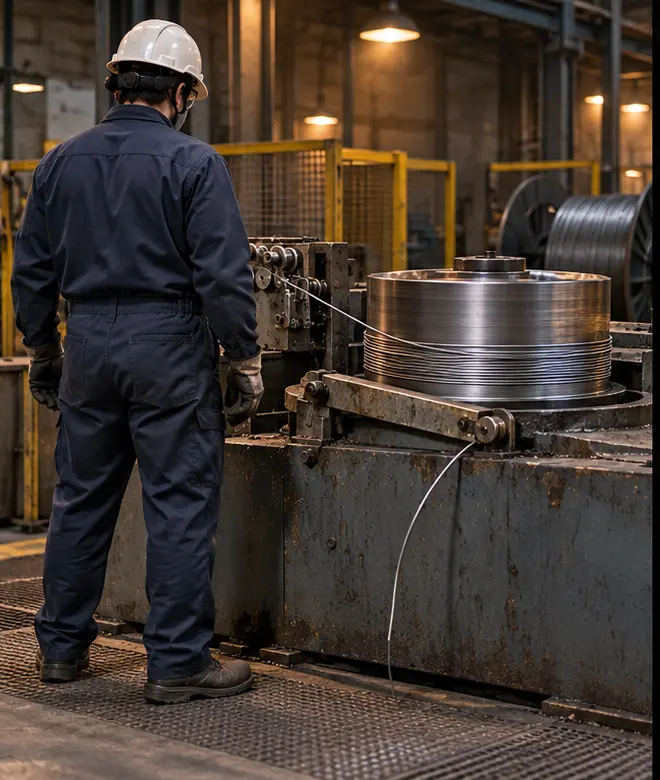
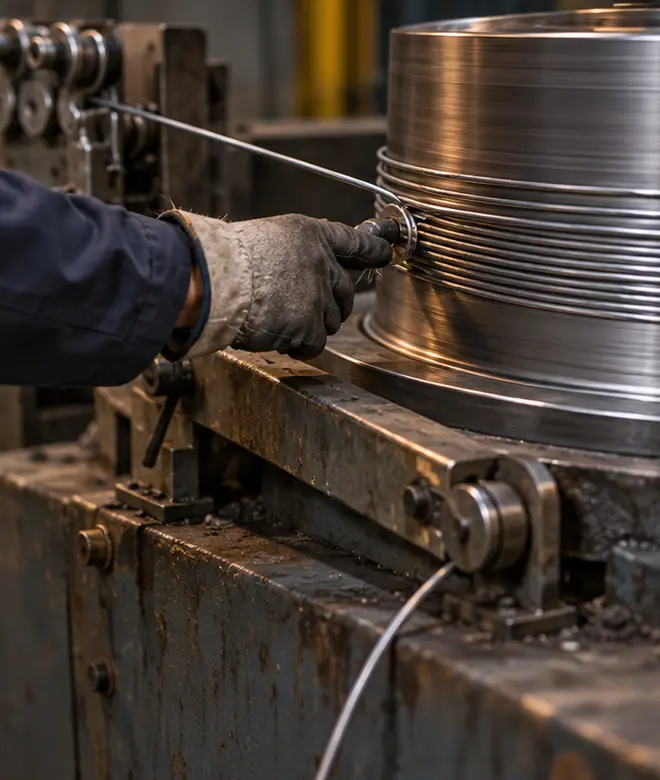
A wire-drawing machine pulled wire around an exposed rotating drum. The operator reached into the running machine. His glove caught in the wire, pulling him between the drum and its housing.
Case File 005 · Captioned visual film
About this film: Narrated, with on-screen captions. AI-generated illustrative reenactment, not footage of the actual people, machine, or workplace. Machine details and staging are illustrative; the captions distinguish investigation findings from prevention lessons.
Control first
Guard the rotating drum and drawing hazards before operation. A safety stop is an additional safeguard; it does not replace a guard that prevents access.
Training cannot substitute for a physical safeguard. If a guard or safety-critical stopping device is missing or defective, take the machine out of service until the hazard is corrected.
The documented record
California’s Fatality Assessment and Control Evaluation (FACE) program investigated this accident. These findings are from its report, not an enforcement decision.
The drum pulled wire through dies to reduce its diameter. Wire then traveled to a separate spooling mechanism.
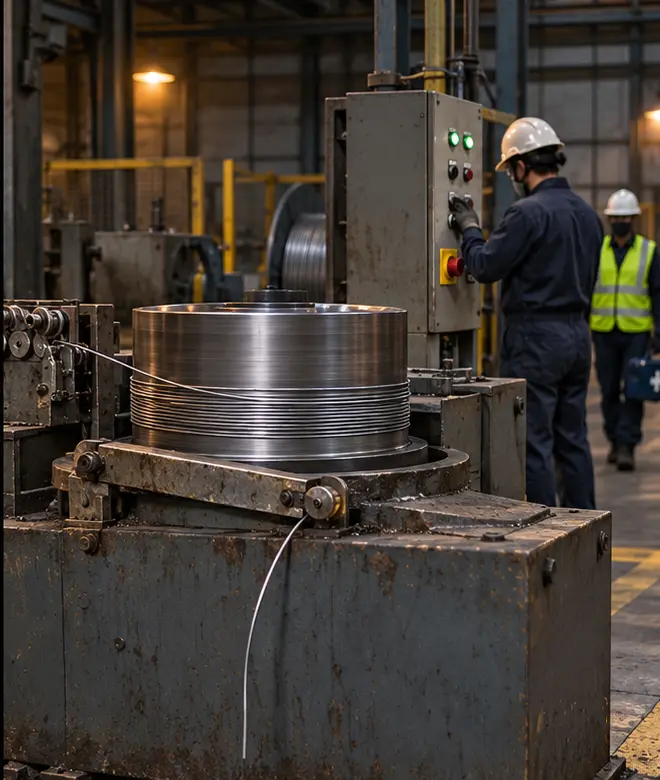
The drum was unguarded. A hinged pressure-activated stop bar across the front had been disconnected. The control-panel emergency shutoff was not properly labeled.
The investigation concluded that the operator reached into the rotating-drum area. His glove caught in the wire and he was pulled between the drum and housing.
A nearby repairman found him and turned off the power. Emergency responders attempted resuscitation. He was pronounced dead at the hospital.
The employer had no machine-specific operating or safety instructions and no formal operator-training program.
What we do not know: The report does not establish why he reached toward the drum. No motive, precise hand motion, or dialogue is invented here. The source identifies no machine brand, serial number, or age. The AI visuals are explanatory staging.
The prevention plan
The first three follow the FACE recommendations; removing hazardous defective machinery from service also follows California’s equipment rule.
Prevent access to dangerous rotating parts and drawing points during operation. Choose safeguards appropriate to the actual machine.
Keep required stopping devices installed, functional, maintained, and clearly identified. Never bypass them.
Provide machine-specific operating procedures and training that explain the hazards, guards, and safety devices.
Do not operate machinery with hazardous defects. Have qualified personnel correct the condition before return to service.
Regulatory context
This case directly supports the federal OSHA Top 10 machine-guarding topic. Federal rules are educational context, not a claim that OSHA cited this California employer.
General machine guarding addresses hazards including rotating parts, ingoing nip points, and the point of operation. Guards must protect workers without creating another hazard.
Title 8 §4234 addresses wire-drawing-machine stopping devices. §3328 prohibits use of hazardous defective machinery. §4002 addresses hazardous moving parts; point-of-operation requirements are addressed separately.
Current rules are prevention context. This page does not claim a citation, willful violation, or legal finding from the FACE report.
Source ledger
Sources checked October 5, 2026.
Pages 1–3: incident, equipment, response, training, and prevention findings. Exhibits: source machine layout.
Machine-guarding context; no enforcement finding inferred.
Wire-drawing stops and machinery with hazardous defects.