Energized lines
The overhead lines remained energized throughout the tree-trimming work.
A tree-care worker was trimming branches from an aluminum extension ladder when an extendable power pole saw contacted a 7,200-volt overhead line. The first control was not a different glove or tool. It was to have the line de-energized and grounded before the work entered the hazard zone.


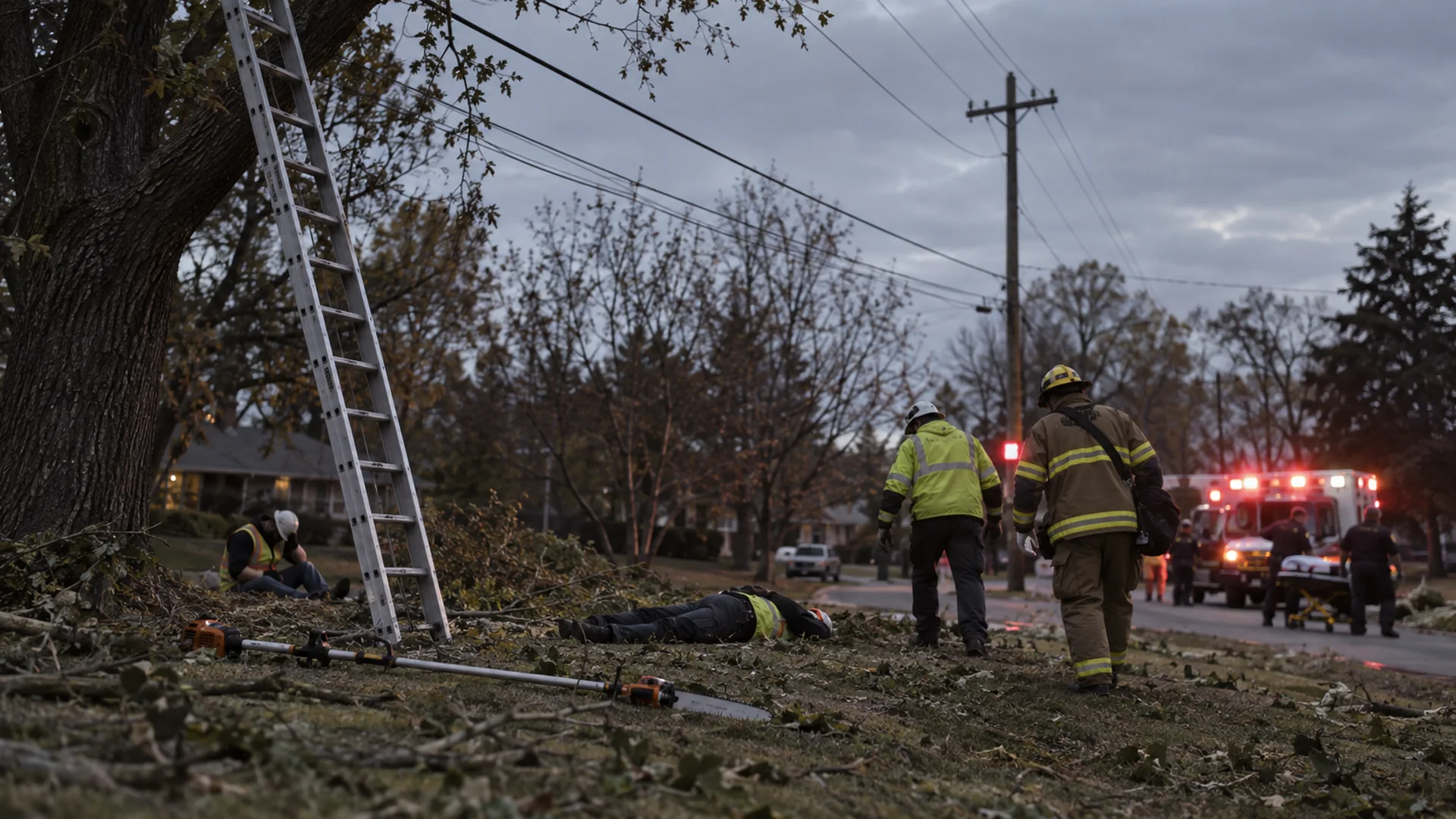
Case File 002 · Film
About this film: This is a reenactment based on the public report—not footage of the real worker or workplace.
Control first
NJ FACE recommended that overhead lines be de-energized and grounded when work is performed near them. Nonconductive access equipment, qualified line-clearance training, and a job hazard analysis remain important layers, but they do not turn an energized line into an ordinary obstacle.
Coordinate the work so the electrical hazard is controlled before branches, ladders, workers, and long tools move into the line’s reach. If energized-line work is unavoidable, it belongs to properly qualified personnel using the procedures and protections required for that work.
The documented record
The facts below come from the official New Jersey worker-fatality investigation. The reenactments are not evidence or a literal copy of the scene.
A three-person crew was trimming a large maple tree at a residential property. The worker was also the company owner.
The worker was approximately 30 feet up an aluminum extension ladder and was using an extendable power pole saw near overhead lines.
As the worker prepared to cut a branch, the saw contacted a 7,200-volt primary line. Electrical current passed through the worker and to ground through the ladder.
The worker remained motionless for approximately 15 seconds and then fell. A ground-crew member who tried to catch him sustained a broken leg.
The worker died 31 hours later. The report identified high-voltage electrocution as the cause of death.
My safety take: This was not a problem that a different ladder or tool could solve by itself. The work should not have entered the energized line’s danger zone. The line needed to be de-energized and grounded, or the work needed to be performed by properly qualified line-clearance workers under the required controls.
The failure chain
The report identified a chain of conditions that placed conductive equipment and a worker inside an energized hazard.
The overhead lines remained energized throughout the tree-trimming work.
The power pole saw contacted the line, and the aluminum ladder contributed to the path to ground.
The job proceeded near high-voltage lines without the controls and specialized preparation the exposure required.
The prevention plan
These controls paraphrase the NJ FACE recommendations. They start with the energy source and work plan—not a product.
Coordinate with the utility so overhead lines near the work are de-energized and grounded.
When work is near an electrical hazard, use ladders made of nonconductive material as an additional layer—not as permission to approach an energized line.
Tree work within 10 feet of energized power lines requires the appropriate line-clearance training and certification identified by the report.
Plan the line status, work zone, access method, tool reach, crew roles, emergency response, and stop-work authority before the job begins.
What the rules point to
The rules do not turn ordinary tree work near an energized conductor into a do-it-yourself equipment decision.
29 CFR 1910.269 addresses qualification, minimum approach distances, electrical protective practices, and line-clearance tree trimming within covered electric-power work.
Title 8 §2950 applies to line-clearance tree trimming near exposed energized overhead conductors and sets minimum approach distances for persons who are not qualified line-clearance tree trimmers. §2951 contains additional line-clearance operating requirements.
This incident occurred in New Jersey. The California material is a comparison for California employers and workers; it is not presented as the law that governed the New Jersey incident.
Episode 002 transcript
The narration follows the documented sequence and ends with the hierarchy of controls identified by the investigation.
“Seven thousand two hundred volts. One metal path to ground.”
“A three-person tree-care crew was trimming a maple at a residential property. The company owner worked about thirty feet up an aluminum extension ladder.”
“He raised an extendable power pole saw near an energized overhead line. As he prepared to cut, the saw contacted the primary conductor.”
“Current traveled through the worker and down the ladder. He remained motionless for about fifteen seconds, then fell. A coworker trying to catch him broke a leg.”
“The worker died thirty-one hours later. The line never stopped being live, and the job entered its hazard zone.”
“Control the energy before the work. De-energize and ground the line. Use qualified line-clearance workers, nonconductive access equipment, and a job plan that keeps every tool and worker out of reach.”
Source ledger
Primary government sources are linked directly. FACE investigations identify hazards and prevention measures; they do not enforce standards or determine fault.
Incident facts, contributing factors, and the four prevention recommendations used in this case file.
Explains the program’s prevention mission and its non-enforcement, non-fault role.
Federal requirements addressing electric power generation, transmission, distribution, and line-clearance tree trimming. The applicable requirements depend on the work and employer.